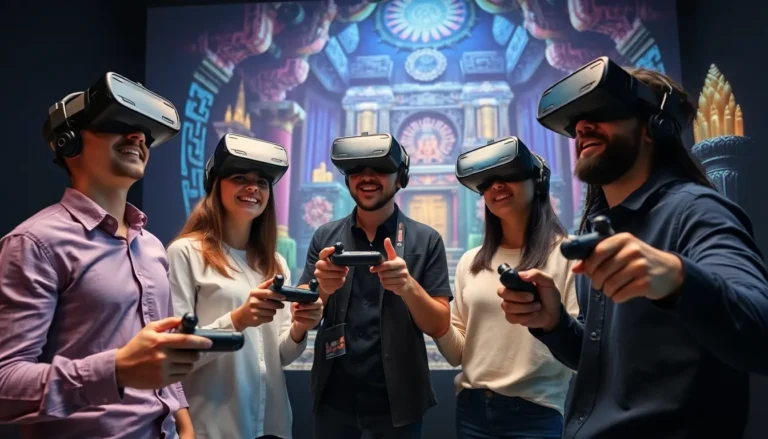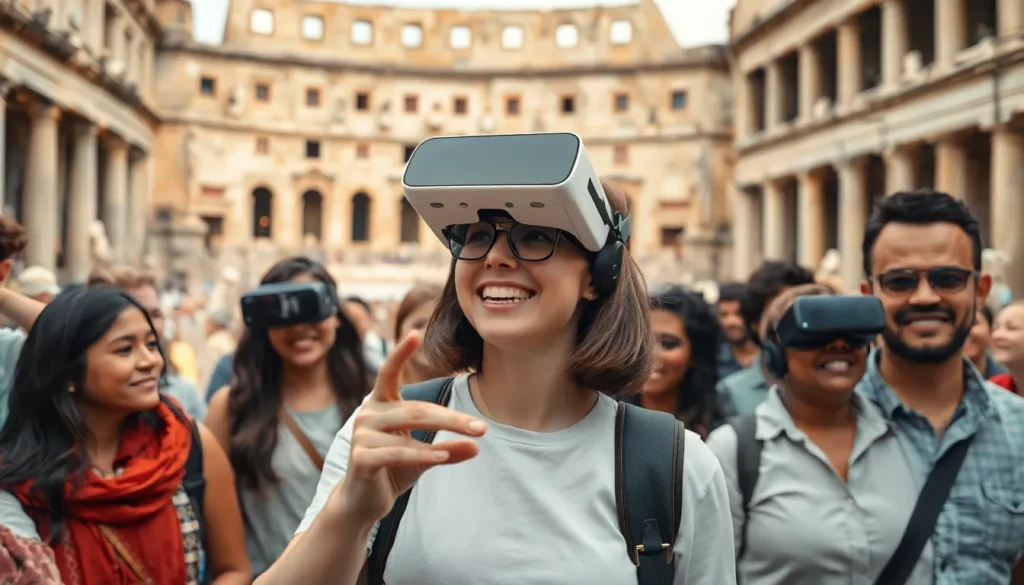
Imagine stepping into the shoes of a Roman gladiator, feeling the roar of the crowd as you prepare for battle, all from the comfort of your living room. Historical VR experiences are not just a trend; they’re a time machine, whisking users away to pivotal moments in history with a flick of a headset. Gone are the days of dusty textbooks and boring lectures—now, history comes alive in vivid detail.
Overview of Historical VR Experiences
Historical virtual reality experiences create immersive learning environments that engage users in significant past events. Users can step into moments like the life of a Roman gladiator, exploring ancient arenas and understanding the challenges faced by these warriors. This technology elevates the educational experience by moving beyond conventional textbooks and lectures.
Various organizations and developers have embraced VR to provide rich historical narratives. Companies such as Oculus and HTC have played pivotal roles, offering platforms that host a range of historical simulations. Each simulation allows users to interact with historical figures, witness key events, and even participate in reenactments.
Access to these experiences can occur through various devices, including VR headsets and mobile applications. Apps like “Rome Reborn” offer virtual tours of ancient Rome, allowing users to visualize the city in its prime. This level of interaction fosters deeper connections to historical content.
Furthermore, the educational potential for historical VR is significant. Schools and museums can incorporate these experiences into curricula and exhibits, enhancing engagement among students and visitors alike. Studies suggest that VR experiences can improve retention rates and increase interest in history.
The future of historical VR experiences looks promising as technology continues to evolve. Innovations in graphics, sound, and haptic feedback will likely enhance realism, further capturing user interest. As these experiences become more accessible, they may transform how society learns about its history.
Benefits of Historical VR Experiences
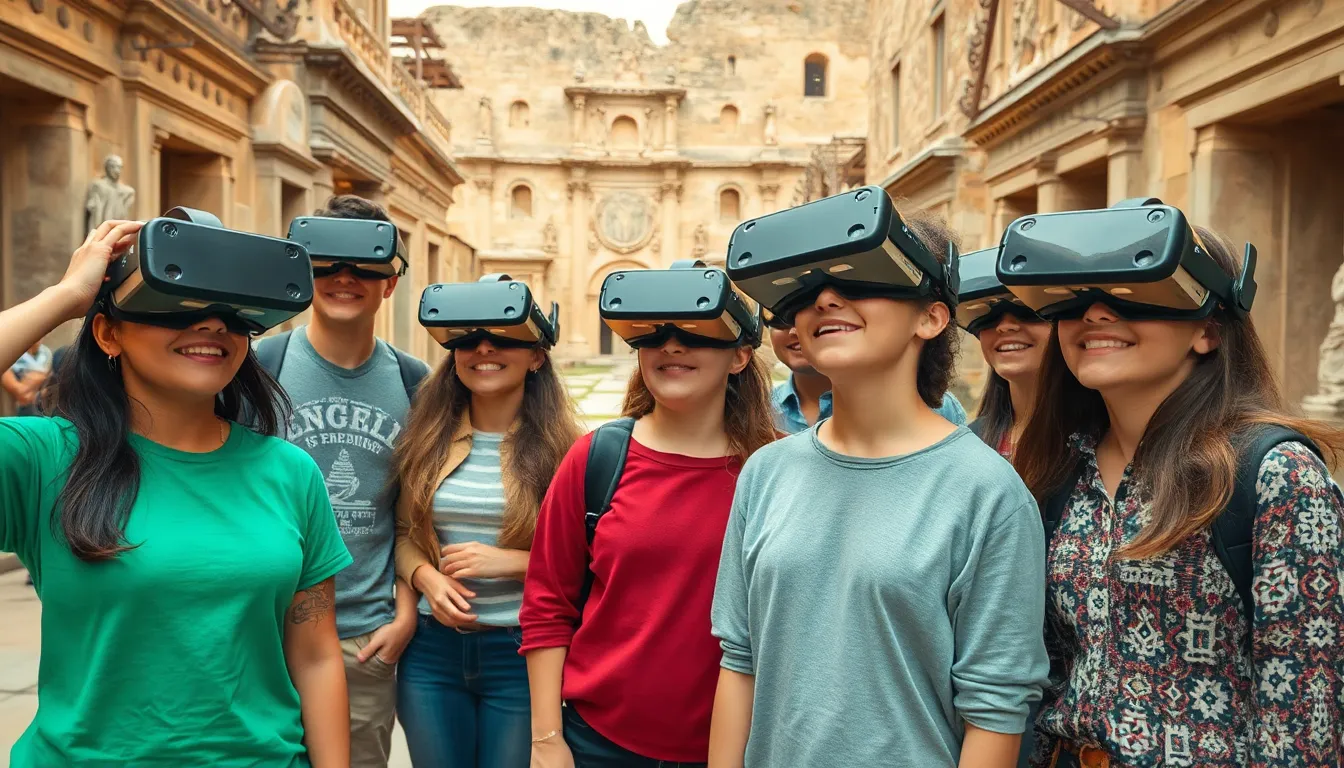
Historical VR experiences offer numerous advantages, enhancing how people learn about and connect with history. These immersive environments create unforgettable educational moments.
Immersive Learning
Immersive learning engages users in unique ways. Virtual reality enables students to experience pivotal events first-hand, deepening their understanding of historical contexts. By walking through ancient cities or observing important moments, learners retain information more effectively. This interactive format replaces passive observation with active participation. Studies show that immersion in educational scenarios increases knowledge retention by up to 75%. Schools incorporating VR into the curriculum provide more memorable experiences, fostering critical thinking and problem-solving skills.
Engaging Storytelling
Engaging storytelling captivates users and makes history relatable. VR experiences present narratives from multiple perspectives, allowing users to empathize with historical figures and their struggles. By encountering characters and events within a three-dimensional space, individuals gain a personal connection to the past. Well-crafted storylines enhance emotional engagement, increasing the likelihood that users will remember key details. Statistics reveal immersive storytelling can raise interest levels among learners by 40%. Historical VR transforms how narratives unfold, ensuring that history resonates with people of all ages.
Popular Historical VR Experiences
Historical VR experiences offer immersive opportunities to explore significant moments linked to past civilizations and events. These experiences transport users through time, making history engaging and memorable.
Ancient Civilizations
Experiences centered around ancient civilizations attract history enthusiasts and educators. “Rome Reborn” permits users to wander through the bustling streets of ancient Rome and witness iconic architecture. Users can interact with virtual citizens, gaining insights into daily life and societal structures. “Assassin’s Creed: Odyssey” reimagines ancient Greece, allowing players to explore landmarks while participating in key historical events. Engaging narratives within these experiences help users understand pivotal moments and cultural contexts more deeply.
Modern History
Modern historical VR addresses more recent events, offering educational insights into transformative periods. “The American Revolution VR” immerses users in the struggle for American independence, highlighting significant battles and political debates. Alongside this, “The Memento: VR Experience” focuses on the Holocaust, providing educational narratives that foster empathy and awareness. Users connect emotionally with these historical subjects, enhancing their understanding of complex themes. Prominent developers continue to create content that reflects diverse perspectives from contemporary history, making the past relevant for today’s audiences.
Technical Aspects of Historical VR
Historical VR experiences rely on advanced technology to create immersive environments. Specific hardware and software components significantly enhance these virtual encounters.
Hardware Requirements
Powerful VR headsets form the backbone of historical VR experiences. Popular models include the Oculus Rift and HTC Vive, which provide an expansive field of view and high-resolution displays. Additionally, robust computers equipped with high-performance graphics cards, such as NVIDIA GTX 1080 or higher, ensure smooth performance. Motion controllers further enhance interaction by enabling precise user movements within the virtual realm. For mobile users, standalone headsets like the Oculus Quest present a more accessible option, delivering significant quality without requiring external devices.
Software Development
Developers utilize various software tools to create engaging historical VR content. Unity and Unreal Engine stand out as two primary platforms, providing advanced graphics capabilities and user-friendly interfaces. These engines facilitate the integration of realistic environments, animations, and scripting for interactive elements. Historical accuracy is also essential, necessitating research from historians and archaeologists to ensure authenticity. Collaboration among developers, historians, and educators shapes narratives that captivate users. Regular updates and optimizations improve performance and content relevance, ensuring experiences remain fresh for both new and returning users.
Challenges and Limitations
Historical VR experiences face several challenges and limitations that impact their development and efficacy.
Historical Accuracy
Ensuring historical accuracy presents a significant challenge in creating immersive experiences. Developers often rely on collaboration with historians to depict events and settings realistically. Variations in interpretations or insufficient research can lead to inaccuracies, affecting users’ understanding of the past. Users might encounter sequences that creatively take liberties with facts for entertainment. Striking a balance between storytelling and factual precision remains a priority for developers. Continuous feedback from historians can help refine these experiences, ensuring they resonate with factual integrity.
Accessibility Issues
Accessibility issues limit the reach of historical VR experiences. High-quality VR headsets can be expensive, making them inaccessible for some users. Limited availability of hardware can prevent educational institutions from integrating these tools into curricula. Furthermore, users with physical disabilities may encounter challenges when using certain VR experiences. Design considerations for inclusive interaction remain critical, necessitating adaptations for diverse user needs. Developers must prioritize accessible options to foster broader engagement and ensure historical VR can benefit all audiences.
The rise of historical VR experiences marks a transformative shift in how individuals engage with the past. By immersing users in significant moments and allowing them to interact with history, these experiences foster a deeper understanding and appreciation of historical contexts.
As technology continues to evolve, the potential for historical VR to enhance education and storytelling remains vast. Developers are increasingly focusing on accessibility and inclusivity, ensuring that a wider audience can benefit from these innovative learning tools.
With ongoing advancements in graphics and interactivity, the future of historical VR promises to make history not only more relatable but also a captivating journey through time.