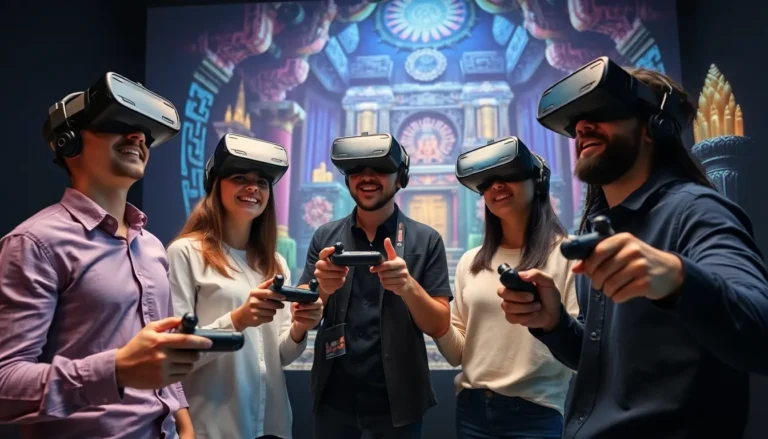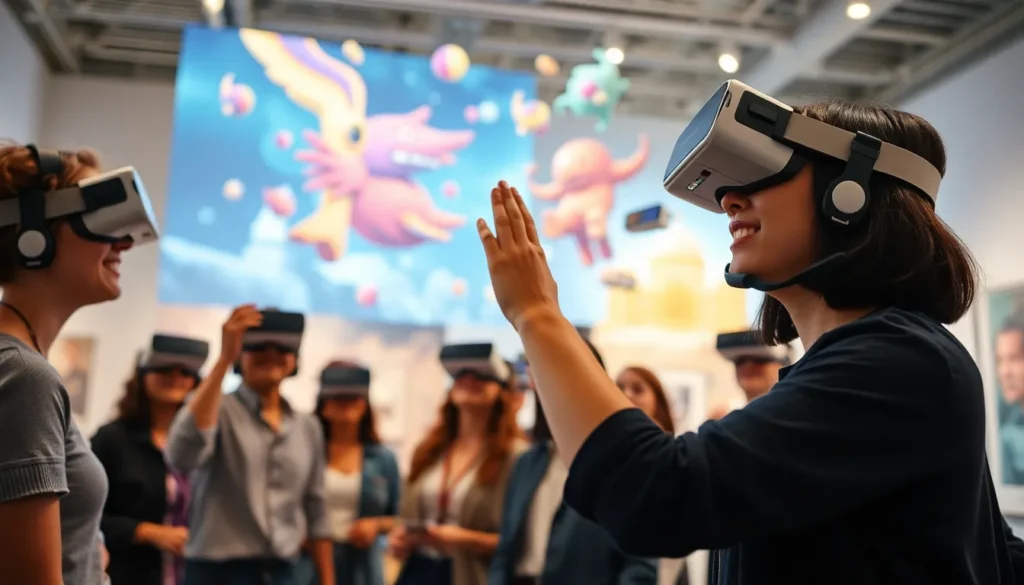
Virtual reality isn’t just for gaming anymore; it’s a playground for creativity where imagination runs wild. From immersive storytelling to jaw-dropping art installations, VR creative projects are transforming how artists, designers, and innovators express themselves. It’s like stepping into a candy store, but instead of sweets, you’re surrounded by limitless possibilities.
Overview of VR Creative Projects
Virtual reality serves as a groundbreaking medium for creative projects across various fields. Artists utilize VR to create immersive environments that captivate audiences and enhance narratives. Designers implement VR technology to prototype and visualize concepts, allowing them to iterate more efficiently.
Innovators push boundaries by integrating VR into education, where students engage with complex subjects in interactive ways. Musicians experiment with virtual environments, creating unique experiences that blend sound and visuals seamlessly. Filmmakers leverage VR for storytelling, crafting 360-degree narratives that place viewers within the action.
Each project type showcases the versatility of VR. Artists like Jon Rafman and Ash Thorp employ these tools to produce stunning virtual artworks. Exhibitions in galleries and museums feature installations that invite participation, challenging conventional perceptions of art.
Emerging trends include virtual art festivals, which connect creatives globally, providing platforms for collaboration and inspiration. The accessibility of VR has opened doors for aspiring creators, enabling them to explore artistic expression without traditional barriers.
By redefining interaction, VR creative projects contribute to dialogue in art, education, and beyond. As technology matures, possibilities expand, inviting further experimentation. Investments in VR by tech companies spur advancements that benefit various industries, enhancing creative potential.
Engagement with VR offers experiences that resonate emotionally and intellectually, fostering deeper connections between creators and their audiences. This innovative technology continues to transform how creativity is expressed and experienced in the modern world.
Popular VR Creative Projects
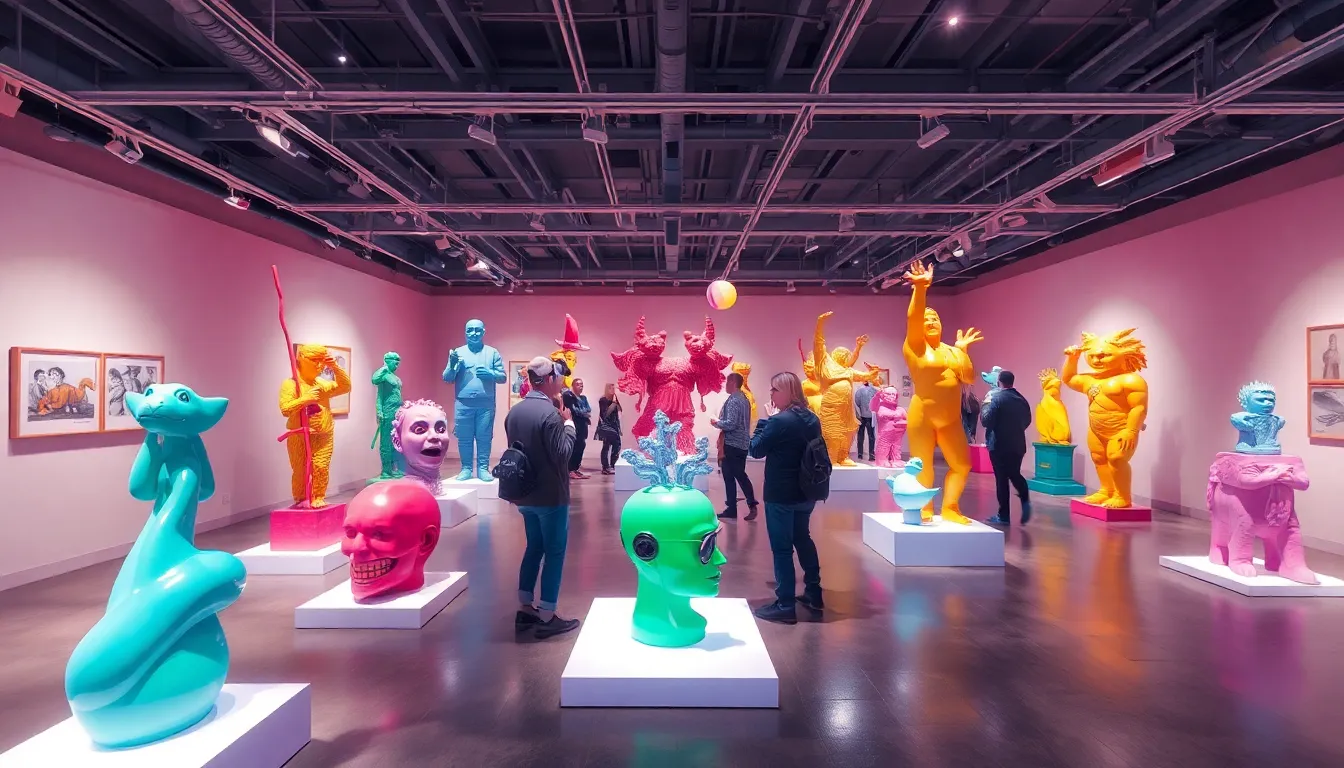
Many VR creative projects showcase the immense potential of virtual reality across diverse fields. These projects range from groundbreaking art installations to engaging interactive experiences.
Art and Installations
Artists design immersive environments that captivate audiences and enhance storytelling. Projects like Jon Rafman’s “Nine Eyes” invite viewers to explore a virtual world using images sourced from Google Street View, blending reality with creativity. Ash Thorp’s work often combines illustrations with 3D modeling, crafting dynamic virtual spaces that encourage exploration. Virtual art exhibitions, such as the VR Art Gallery, feature multiple artists collaborating across borders, offering a variety of perspectives in one space. These experiences challenge traditional notions of art, engaging viewers in new ways and prompting them to interact with the art.
Games and Interactive Experiences
Developers push boundaries through VR games, creating interactive experiences that engage players on multiple levels. Titles like “Beat Saber” blend music and movement, inviting players to slice through beats while dancing. “Half-Life: Alyx” expands the narrative experience within the popular franchise, allowing players to explore a richly detailed environment. Such games integrate storytelling and interactivity, providing immersive gameplay that captivates users. Schools also adopt VR for learning, developing programs that immerse students in historical events or scientific concepts. These applications highlight the versatility of VR, reinforcing its value across entertainment and education.
Tools and Software for VR Creation
Tools and software play a crucial role in VR creation, enabling artists and developers to bring their visions to life. Various platforms and applications streamline the creative process, enhancing both usability and interactivity.
Development Platforms
Unity and Unreal Engine stand out as leading development platforms. Both offer robust features that cater to diverse VR projects. Unity provides a user-friendly interface and a vast asset store for quick prototyping. Unreal Engine excels in high-fidelity graphics, making it ideal for immersive experiences. Mozilla Hubs serves as an accessible option for web-based VR environments, enabling easy sharing and collaboration. Additionally, Blender supports 3D modeling, allowing creators to export their designs seamlessly. Each platform has unique strengths, accommodating a wide range of creative needs.
Design Tools
Design tools are essential for crafting visual assets in VR. Adobe Creative Cloud includes applications like Photoshop and Illustrator, which help in creating stunning graphics. SketchUp caters to architects and designers, facilitating 3D modeling with intuitive tools. Tilt Brush allows artists to paint in a 3D space, offering an immersive creative experience. Vectary specializes in online 3D design, enabling collaboration among teams. These tools empower creators to develop captivating content that enhances the overall VR experience.
Challenges in VR Creative Projects
Creative projects in virtual reality face several challenges. Developers and artists often encounter hurdles that impact their innovations and user engagement.
Technical Limitations
Hardware constraints frequently challenge VR projects. Devices like headsets may lack the processing power to render complex graphics, affecting realism. Additionally, limited access to high-speed internet can hinder real-time collaboration and updates. Content creators also grapple with issues in compatibility across various platforms, creating inconsistencies in user experiences. Furthermore, insufficient development tools might restrict the scope of creative expression. As technology advances, addressing these limitations becomes crucial for enhancing VR’s potential.
User Experience Considerations
User experience remains vital in the success of VR projects. Ensuring intuitive navigation enhances immersion and makes content engaging. Creators must design experiences that avoid motion sickness, a common concern for many users during VR interactions. Effective onboarding experiences guide users, making complex interfaces simpler to understand. Providing meaningful interactivity can also enrich user experiences, encouraging exploration and discovery. Balancing these factors is essential for increasing user retention and satisfaction in VR environments.
Future Trends in VR Creative Projects
Emerging technologies are paving the way for innovative VR creative projects. Increased accessibility of VR hardware enables more creators to participate in crafting immersive experiences. Innovations like haptic feedback and eye tracking enhance user interactivity, resulting in deeper engagement.
Businesses are exploring VR for brand experiences, with companies investing in virtual showrooms and events. Art institutions are also incorporating VR to display works in unique formats, facilitating virtual exhibitions that broaden audience reach. Social VR platforms are fostering collaborative projects, allowing artists and developers to connect regardless of their physical locations.
Data from market research shows that the demand for VR content will grow significantly in the coming years. This surge in interest cultivates a rich environment for experimentation and creative exploration. Educational institutions are likewise integrating VR into curricula, enhancing interactive learning scenarios that cater to diverse learner needs.
Gamification of VR experiences continues to resonate with users, encouraging participation through game mechanics. Artists are pushing boundaries by integrating AR elements, blending virtual and physical realities seamlessly. As VR technology evolves, it drives conversations around ethics, accessibility, and environmental impact within creative industries.
Statistical trends indicate a rise in VR storytelling applications, with filmmakers embracing 360-degree narratives that captivate viewers. Increased collaboration among creatives accelerates innovation in visual content, creating synergies between art and technology.
With advancements in artificial intelligence, personalized VR experiences are becoming more feasible, tailoring content to individual preferences. Engagement in VR projects is anticipated to foster stronger emotional connections between users and creators, ultimately transforming the landscape of creative expression.
The future of VR creative projects is undeniably bright. As technology continues to advance, it opens up new avenues for artists and innovators to express themselves in unprecedented ways. The blend of immersive storytelling and interactive experiences not only captivates audiences but also fosters a deeper connection between creators and viewers.
With the increasing accessibility of VR tools and platforms, a diverse range of voices can now participate in this evolving landscape. As challenges are addressed and new trends emerge, the potential for creativity in virtual reality will only grow. This transformation in artistic expression is set to redefine how people experience and interact with art and education in the years to come.