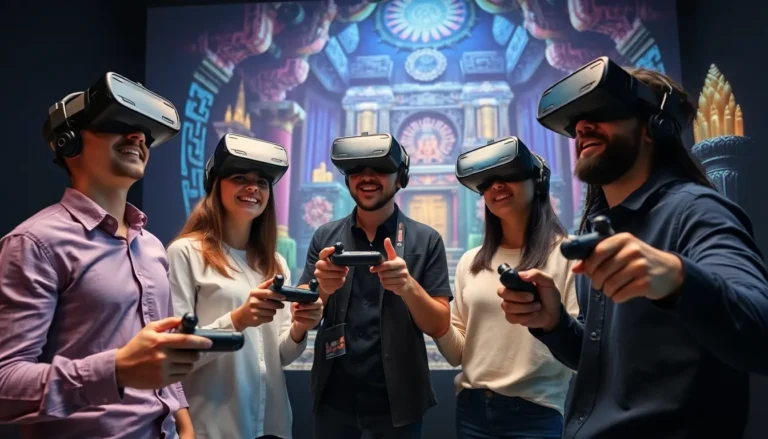
Imagine slipping on a headset and suddenly being transported to a world where the impossible feels possible. Welcome to the realm of virtual reality (VR), where experiences are crafted like cinematic visions. But behind every breathtaking VR experience is a skilled virtual reality app development company poised to bring these dreams to life. In this text, we’ll investigate into the intricacies of VR, explore how these apps are born, and even navigate the challenges faced along the way. Buckle up: it’s going to be an eye-opening adventure.
Understanding Virtual Reality and Its Applications

Virtual reality is not just a buzzword: it’s a revolutionary technology that alters our perception of reality. By immersing users in lifelike environments, VR enhances various sectors including gaming, education, health care, and real estate. Within the gaming world, players are no longer passive participants but active inhabitants of fantastical realms. In education, VR offers immersive lessons, enabling students to interact with historical events as if they were time travelers. Also, in healthcare, simulated environments assist professionals in training without real-world consequences. Such applications underscore the versatility of virtual reality, making it a hot commodity for users and developers alike.
Key Components of Virtual Reality App Development
Creating a VR app is a symphonic blend of several crucial components. First and foremost, hardware plays a role. Headsets such as Oculus Rift or HTC Vive provide the viewer experience while tracking motion and adjusting visuals accordingly. Then comes software, the backbone of any VR experience. This includes both the development engines like Unity or Unreal Engine and the content itself, which can encompass graphics, audio, and coding. Another critical aspect is user interface design: intuitive controls ensure users interact seamlessly with the environment, minimizing frustration. Without proper integration of these elements, a VR app might as well be a ship without a captain.
The Development Process for Virtual Reality Apps
The journey of developing a virtual reality app typically unfolds in several stages. Initially, concept development takes center stage, where ideas are brainstormed and refined. This often involves prototyping to visualize how users will interact with the app. After that, the actual development kicks off, incorporating graphics and features based on user feedback. Testing follows, with developers refining the app to ensure a smooth user experience. Finally, the app launches, awaiting the judgment of the user base. But the process doesn’t conclude here, in a world where user expectations evolve like fashion trends, continuous updates and support are paramount.
Challenges in Virtual Reality App Development
Even though its allure, virtual reality app development is fraught with challenges. One significant hurdle is the high cost of production, including specialized hardware and software. Also, developers often combat technical limitations such as lag, which can significantly detract from user immersion. Content creation can also be daunting: crafting an engaging story for a VR experience that keeps users coming back demands a unique blend of artistry and technical skill. User adoption poses another challenge: not everyone is ready to embrace VR, and ensuring relevant and accessible content is crucial for broadening its appeal.
Choosing the Right Virtual Reality App Development Company
Selecting a virtual reality app development company is no small feat. Potential clients should look for firms with a proven track record in creating successful VR projects. It’s essential to assess their portfolio, ensuring it demonstrates versatility across different industries. Communication also plays a pivotal role: a developer who understands a client’s vision while offering creative input can elevate a project from good to exceptional. Besides, consider customer reviews and testimonials. A reputable company will have satisfied clients who vouch for its expertise and commitment to quality. Investing in the right partner can make all the difference.
Future Trends in Virtual Reality App Development
The future of virtual reality app development promises an exciting intersection of technology and creativity. One notable trend is the rise of social VR, platforms allowing users to interact in virtual spaces as avatars, enhancing the social aspect of experiences. Also, advancements in artificial intelligence are set to personalize VR experiences, making them more responsive and intuitive. As companies continue to invest in VR and AR (augmented reality), the lines between the two will blur, yielding hybrid experiences that captivate audiences. Eventually, the evolution of VR applications will foster new storytelling techniques, opening doors to uncharted territories in user engagement.